




Choosing a Firearm Case That Fits Your Storage Space
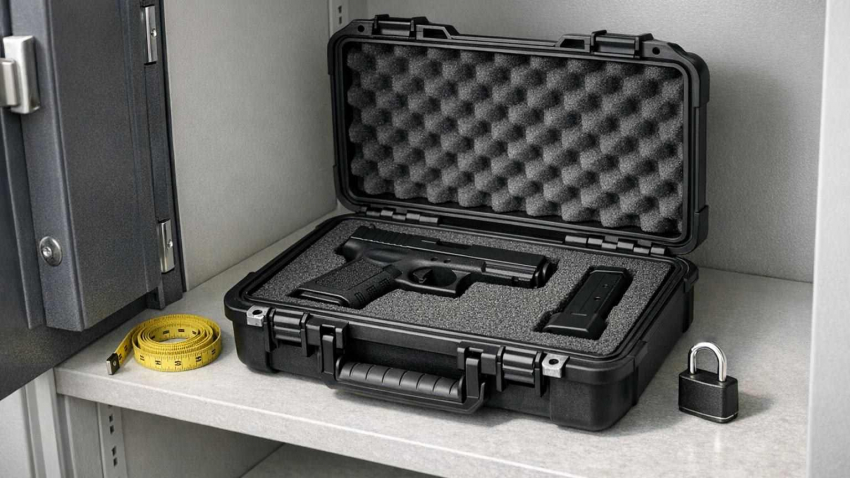
Even though a case looks suitable for storage in a shop, on return to your home it can develop into a real nuisance. This can be due to it not clearing a door when being taken out of a cupboard, not having space for a lock or not allowing for the safe storage of the firearm without it coming into contact with controls and other fixings. Good storage involves weighing up the need to protect your gear against the need for easy access to it, and the space available for storage against the actual use of the item to be stored. Start by looking at the storage location and then consider the case itself and the accessories that need to be carried with the firearm.
Measure the storage space, not just the shelf
When choosing a case for your shotgun for storage at home it is important to remember to measure the space in which the case will be stored. Although a case may appear to fit a shelf, when closed it will need to be tall enough to fit in the space above the shelf and with hinges on one side, latches, handles etc on the other. Space behind the door or in a cupboard will also need to be taken into account.
When buying a case for storing a firearm at home, the route that the case will take to get to that storage point must also be measured. A long case may fit into a cabinet but fail to pass through a door or turn a corner in a hall. Also take into account any hinges, shelf lips etc that may reduce the accessible width of the storage space. Measure the smallest opening along the route to the storage point.
Security Storage and transport requirements for cases can change so check the current official guidelines covering the area in which you live before settling on a method of storage. Security Storage does not have to be the storage area itself. The case is part of a whole security system and should be chosen to fit with other security measures.
Get the gun case size right
When purchasing a gun case, compare the manufacturer's stated internal dimensions for the case with the overall internal dimensions of the gun, including any fitted sights, scopes, slings etc. Measure up the firearm to ensure that there is to be no pressure on any part of the gun when it is stored.
A 'close fit' does not necessarily mean a 'good fit'. A firearm could potentially be pressed into a case with a loose fit of lining, and pressure could be exerted on parts such as the stock, or even on the controls. Even with a well shaped interior to the case, it is possible that the cut-outs could be of a 'universal' nature and not necessarily designed to accommodate all of the attachments of a particular firearm.
Having excess space within a case is not necessarily bad news, for it can allow space for a gun's sling, magazines, protective eyewear, etc. Items which would normally be left about loose could be stored separately and safely within the case's interior. However, in carrying the case around with the gun inside, it is best to pack it out as if it were going on holiday in order to prevent damage to the interior of the case and to the gun itself.
Decide what protection the journey requires
There is no single case that is intended to be used to offer protection to a firearm. Case styles are generally aimed at being light enough to store away, yet robust enough to withstand kicks and drops. A case intended for short trips between secured locations will have a different design to a case which will be moved about regularly between locations.
For short trips between secure stores and in secure conditions a light case with a flexible design may be the best option. For store to store travel or when the case is to be placed under other gear in a vehicle a more robust case with solid sides will afford greater protection. Weather, dust and damp are also major factors to consider and must be protected against.
In addition, ensure the padding does not trap in moisture. Store cases in cool, dry rooms and allow the firearm and case to dry before long term storage. Follow the care of the firearm and refer to the manufacturer's instructions for storage of the case.
Make access and secure storage compatible
A case can be to protect a firearm from accidental damage, but it is of little value to control access to the firearm. Consider how the case will be locked and where the case will be stored. Ensure that the lock will not require the case to be positioned in an awkward location. Consider the route that the case will take to and from storage and the size of the openings through which it will pass.
Even a good case needs to be accessible. A case that is difficult to open and/or to move around could lead to hurried behavior. A clear storage area and a simple opening and closing mechanism of the case itself will aid to ensure that the case and its contents are handled properly at all times.
When choosing where to store your firearm and its case, only allow authorized individuals to have access to the firearm as well as to any keys, combinations, etc. that are required to open up the case. This can be governed by local laws, the type of firearm and the individual's circumstances – always refer to the current official guidelines.
Check the case before committing to it
You would make a short list of the dimensions needed to check for a case to be stored in a particular space (e.g. the smallest opening on the route to be taken with the case, the internal dimensions of the storage space, the dimensions of the gun and any attached items, the type of lock desired for the case and any other accessories that will be required to be carried in the case).
Now it is delivered to your doorstep – inspect the fit of the gun case for the unloaded firearm (pointed in a safe direction, following the manufacturer's recommendations for safe handling) for the following features: lining not obstructing controls; latches securely closing without excessive force; contents to remain stable when the case is carried around. Check the functioning of the handle, hinges and lock too.
An empty case has room for slight variations in your stored firearm but after that, it's best to keep the case fairly packed to stop contents shifting around during movement. Make sure to store any maintenance equipment separately to your stored firearm and occasionally check the interior of the case for signs of dirt, wear & tear, dampness or breaking. Eventually you'll have to replace a case when the closure, structure or padding can no longer perform its intended task.
Don't go for the largest case with the most amount of padding. The best case is one that will fit in the space available, be used correctly in terms of the way you move about with the firearms and allow secure storage. Check local requirements as well as the manufacturer's care instructions for the firearms and equipment you store from time to time.
Leave a Reply