



How to Evaluate Firearm Fit, Controls and Intended Use: A Practical Planning Framework
Before comparing models, finishes or accessories, decide how the firearm will be used. A poor match can encourage awkward handling, rushed loading or an uncomfortable shooting position; a suitable choice makes safe habits easier. Ask whether its dimensions, controls and operating system suit the lawful activity, the user's experience and the training environment. Treat selection as a safety decision, not a shopping shortcut.
Start with the job, not the catalogue
Describe the intended use plainly: supervised target shooting, clay shooting, lawful hunting where permitted, or maintaining a collection. Each activity creates different demands for handling, sighting, carry, storage and cleaning. A firearm chosen for one purpose may be inconvenient or unsuitable for another.
Consider the expected conditions. Will you shoot from a bench, standing position or prepared range station? Will you carry the firearm between secure storage and the firing point? Might you use it in cold weather, with gloves or during longer sessions? These factors affect stock dimensions, control placement and balance.
The decision should reflect the user's training. A new owner may benefit from simple, clearly marked controls and instruction from a qualified trainer. An experienced shooter still needs to assess whether an unfamiliar design changes the loading, unloading or safety routine. Familiarity with one platform does not replace reading another firearm's manual.
Check fit before judging finish
Firearm fit affects whether the user can mount or shoulder the firearm consistently, reach controls without shifting the firing grip and align the sights without forcing the head or wrists into an unnatural position. Warning signs include repeated head movement, a collapsing wrist, excessive stretching for the trigger or a stock that catches on clothing.
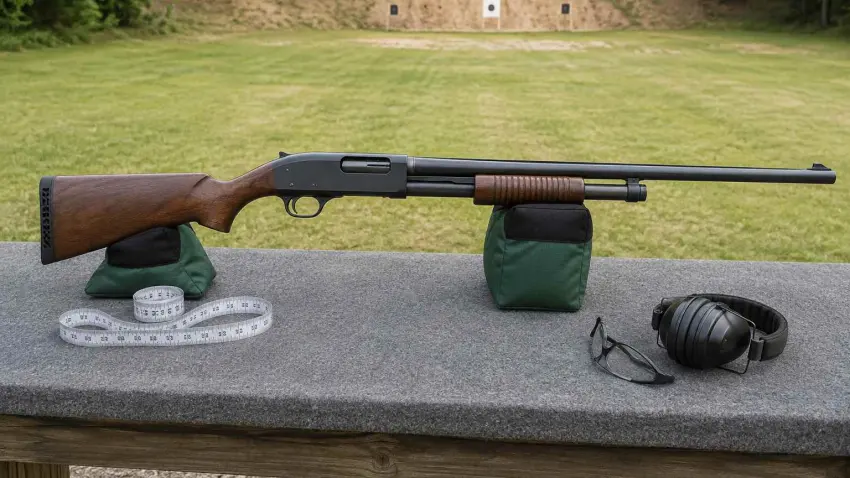
For a shotgun, assess under supervision how naturally the stock meets the shoulder and cheek when brought into position. The eye should not be forced into alignment, and the stance should remain balanced rather than twisted. For a rifle, check length of pull, cheek support, grip shape and the ability to operate the action while maintaining a stable, safe hold.
Never test fit with a loaded firearm. Follow the range or dealer's handling procedure, keep the muzzle in a safe direction and leave the action open when required. If the dimensions seem close but not right, ask a qualified professional whether an approved adjustment is appropriate. Do not improvise changes to a stock, trigger or safety system.
Operate every control deliberately
Controls should be understandable by touch and reachable without awkward movement. Identify the safety or manual safety, action release, magazine release, bolt or charging handle, loading port and any decocking or unloading controls. Their location matters, as does the sequence in which they are used.
Handle an unloaded example only under proper supervision. Can you tell whether the action is open? Can you remove the magazine or ammunition source without confusing it with another control? Can you keep your trigger finger outside the trigger guard while operating the action? If not, stop and seek instruction rather than relying on memory.
A control that is excessively stiff, vague or easy to activate accidentally deserves professional assessment before use. Never disable, defeat or alter a safety feature. Report suspected malfunctions to a qualified gunsmith or the manufacturer through an approved route.
Match ergonomics to the range routine
Consider how the firearm will be carried safely, with the action open where appropriate, placed on a bench, transported in a case and returned to secure storage. Weight and balance can influence fatigue, but a lighter option is not automatically easier to control. If tiredness affects muzzle awareness or handling discipline, end the session.
The sight picture should be repeatable without pressing the face hard into the stock or lifting the shoulder unnaturally. Controls should remain usable while maintaining a safe muzzle direction. If eye or hearing protection, seasonal clothing or other equipment changes the fit, test those conditions under supervision before buying.
Accessories can alter balance, clearance or storage. Select only compatible equipment, follow the manufacturer's instructions and check that it does not obstruct controls or create a snagging hazard. More equipment is not a substitute for correct fit or practice.
Verify the decision before buying
A short written comparison can prevent an impulse purchase. Record the intended use, range conditions, fit observations, control concerns and training still needed. Check the manual and manufacturer information for the exact model, including ammunition compatibility, cleaning guidance and approved operating procedures.
Use this checklist before deciding:
– The intended activity and range conditions are clearly defined.
– The unloaded firearm fits without forcing the head, shoulders, wrists or trigger hand into position.
– Every control can be identified and operated without placing a finger on the trigger.
– The action status can be confirmed visually and through the stated safe procedure.
– Eye and hearing protection, clothing and planned accessories do not interfere with safe handling.
– Storage, transport, training and maintenance arrangements are in place.
– Legal and licensing requirements have been checked against current official guidance.
Requirements for ownership, transport, storage, licensing and use vary by jurisdiction and may change. Confirm current rules with the relevant government authority before buying or taking possession. A dealer or instructor can explain handling procedures, but official sources remain the proper reference for legal obligations.
Let safety decide the shortlist
The best selection is the one the user can operate consistently, maintain correctly and store securely for its intended purpose. If fit is marginal, controls are confusing or the use case is unclear, postpone the purchase. More time with an unloaded firearm, a qualified instructor and the manufacturer's instructions is usually more useful than overcoming a poor match through accessories or guesswork.
Responsible ownership begins with that restraint. Choose only after the practical questions have clear answers, and review the decision as training, equipment and lawful use change.
Leave a Reply